
Our Citizens

Citizens of the kingdom

The kingdom of God has citizens, and every citizen holds office. The offices are not invented by men and not elected by a congregation; they are given by the ascended King, and the letters of the apostles name them one by one. This page sets out the offices he has given and the qualifications each man must meet before he holds them.

The offices he has given

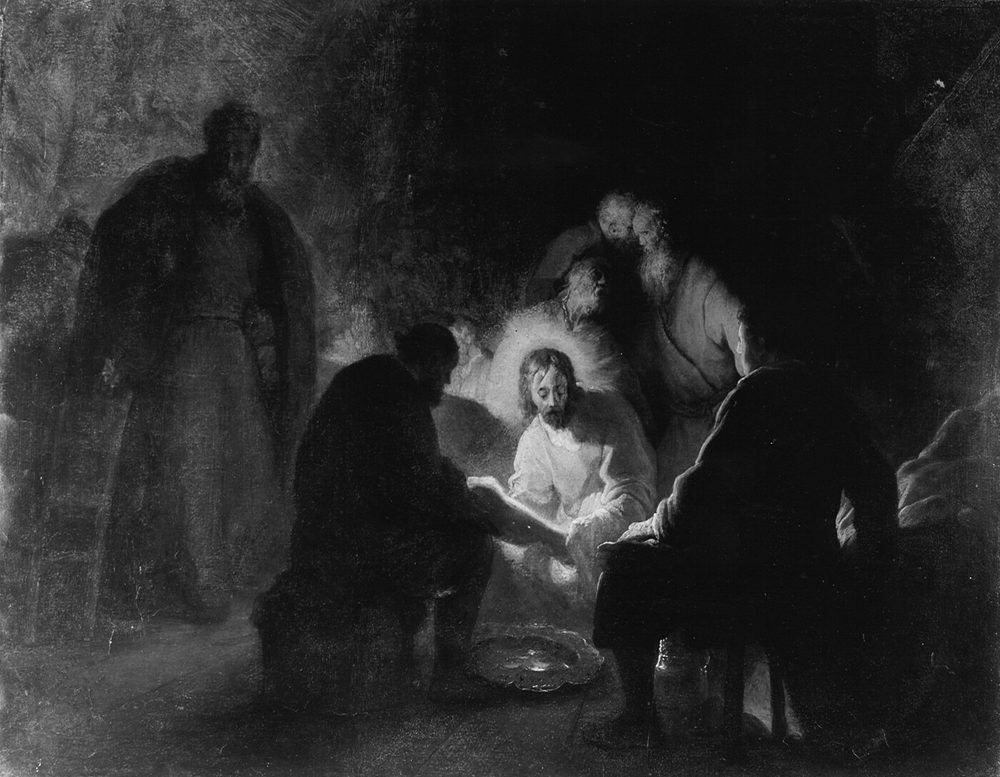
Christ kneels to wash a seated disciple's feet; the others wait in a lamplit room.
Christ Washing the Disciples' Feet — Attributed to Jan Lievens, c. 1625

A citizen of this kingdom is not merely a member of a congregation; he holds office. The offices are not invented by men and they are not elected by a congregation. They are given by the ascended King, and the letters of the apostles list them one by one. Each has its own work, and every one of them exists for a single purpose — the edifying of the body of Christ.

“And he gave some, apostles; and some, prophets; and some, evangelists; and some, pastors and teachers; For the perfecting of the saints, for the work of the ministry, for the edifying of the body of Christ:”

Ephesians 4:11–12

“And God hath set some in the church, first apostles, secondarily prophets, thirdly teachers, after that miracles, then gifts of healings, helps, governments, diversities of tongues.”

1 Corinthians 12:28

“Who also hath made us able ministers of the new testament; not of the letter, but of the spirit: for the letter killeth, but the spirit giveth life.”

2 Corinthians 3:6

Every one of these offices exists for a single purpose, the edifying of the body. And Scripture is plain about what each man must be.

What each man must be

For the ministries Christ gave, Scripture sets out what each man must be. An apostle is not self-appointed; he has seen the risen Lord and is called by Christ, not by men.

“Paul, an apostle, (not of men, neither by man, but by Jesus Christ, and God the Father, who raised him from the dead;)”

Galatians 1:1

“Am I not an apostle? am I not free? have I not seen Jesus Christ our Lord? are not ye my work in the Lord?”

1 Corinthians 9:1

A prophet speaks as he is moved by the Holy Ghost, and his word is weighed by other prophets.

“For the prophecy came not in old time by the will of man: but holy men of God spake [as] [they] [were] moved by the Holy Ghost.”

2 Peter 1:21

“Let the prophets speak two or three, and let the other judge.”

1 Corinthians 14:29

An evangelist does the work of his ministry, and makes full proof of it.

“But watch thou in all things, endure afflictions, do the work of an evangelist, make full proof of thy ministry.”

2 Timothy 4:5

A pastor feeds the flock of God among him, and the servant of the Lord must be apt to teach.

“Feed the flock of God which is among you, taking the oversight [thereof], not by constraint, but willingly; not for filthy lucre, but of a ready mind;”

1 Peter 5:2

“And the servant of the Lord must not strive; but be gentle unto all [men], apt to teach, patient,”

2 Timothy 2:24

These are the ministries Christ gave, and each man is qualified by the One who gives him. But for the two standing offices of a local church, the letters set out the character each man must have first: bishops, and deacons.

Bishops, and deacons

For the two standing offices of a local church, the letters set out in full the character each man must have before he is set over the house of God. A bishop is to be a steward of God and a feeder of the flock, not a taskmaster. A deacon is to be grave and honest and not a talker. The office is not a rank to be sought; it is a work to be done, and the qualifications come first.

The qualification for a bishop:

“This [is] a true saying, If a man desire the office of a bishop, he desireth a good work. A bishop then must be blameless, the husband of one wife, vigilant, sober, of good behaviour, given to hospitality, apt to teach; Not given to wine, no striker, not greedy of filthy lucre; but patient, not a brawler, not covetous; One that ruleth well his own house, having his children in subjection with all gravity; (For if a man know not how to rule his own house, how shall he take care of the church of God?) Not a novice, lest being lifted up with pride he fall into the condemnation of the devil. Moreover he must have a good report of them which are without; lest he fall into reproach and the snare of the devil.”

1 Timothy 3:1–7

“If any be blameless, the husband of one wife, having faithful children not accused of riot or unruly. For a bishop must be blameless, as the steward of God; not selfwilled, not soon angry, not given to wine, no striker, not given to filthy lucre; But a lover of hospitality, a lover of good men, sober, just, holy, temperate; Holding fast the faithful word as he hath been taught, that he may be able by sound doctrine both to exhort and to convince the gainsayers.”

Titus 1:6–9

The qualification for a deacon:

“Likewise [must] the deacons [be] grave, not doubletongued, not given to much wine, not greedy of filthy lucre; Holding the mystery of the faith in a pure conscience. And let these also first be proved; then let them use the office of a deacon, being [found] blameless. Even so [must] [their] wives [be] grave, not slanderers, sober, faithful in all things. Let the deacons be the husbands of one wife, ruling their children and their own houses well. For they that have used the office of a deacon well purchase to themselves a good degree, and great boldness in the faith which is in Christ Jesus.”

1 Timothy 3:8–13

A bishop is a feeder of the flock and not a taskmaster; a deacon is to be grave and honest and not a talker. None of it is sought and none of it is voted on. It is an office that must be taken.

An office that must be taken

No man takes this honour to himself. It is called, appointed, and given. And because it is given rather than assumed, it can be lost — not in theory, but on the record. Judas held the office of an apostle and lost it. The servant who was given a talent and did nothing with it was cast out. The mercy of God in such a case is not softness; it is severity, and Scripture calls it both in the same breath.

“And no man taketh this honour unto himself, but he that is called of God, as [was] Aaron.”

Hebrews 5:4

“His bishoprick let another take.”

Acts 1:20

“And cast ye the unprofitable servant into outer darkness: there shall be weeping and gnashing of teeth.”

Matthew 25:30

“Behold therefore the goodness and severity of God: on them which fell, severity; but toward thee, goodness, if thou continue in [his] goodness: otherwise thou also shalt be cut off.”

Romans 11:22

An office held in this kingdom is held soberly, or it is held in vain. And what keeps it sober is not a rank above another man in Christ: every citizen is a royal priesthood.

A royal priesthood

Every citizen of this kingdom is set apart at once — a chosen generation, a royal priesthood, an holy nation, a peculiar people. There is no rank above another man in Christ, and there is no man too low to speak for the King. The call on such a life is not to build something for yourself but to show forth the praises of him who called you out of darkness into light.

“But ye [are] a chosen generation, a royal priesthood, an holy nation, a peculiar people; that ye should shew forth the praises of him who hath called you out of darkness into his marvellous light.”

1 Peter 2:9

“Which in time past [were] not a people, but [are] now the people of God: which had not obtained mercy, but now have obtained mercy.”

1 Peter 2:10

No man in Christ is too low to speak for the King, and no man so high that he need not. This kingdom is not a scattered crowd. It is built together for an habitation of God.

Built together for an habitation of God

This kingdom is not a scattered crowd. It is a temple under construction, and every citizen is a living stone in it — fitted, joined, and framed together in Christ by the Spirit. Which means the weakest stone is not surplus. A city that leaves out the poor is not a city.

“And are built upon the foundation of the apostles and prophets, Jesus Christ himself being the chief corner [stone].”

Ephesians 2:20

“In whom all the building fitly framed together groweth unto an holy temple in the Lord.”

Ephesians 2:21

“In whom ye also are builded together for an habitation of God through the Spirit.”

Ephesians 2:22

Every citizen a living stone, and the weakest stone is not surplus — a city that leaves out the poor is not a city. And the nearest word Scripture has for what a citizen actually is is an office of his own, ambassador.

An office of his own: ambassador

The nearest word Scripture has for what a citizen of this kingdom actually is, is ambassador. A man sent into a country that is not his own, speaking for a throne that is not his, carrying a message he did not compose. He is not a tourist. He does not speak for himself, and he does not put his own name at the top of the letter.

“Now then we are ambassadors for Christ, as though God did beseech [you] by us: we pray [you] in Christ's stead, be ye reconciled to God.”

2 Corinthians 5:20

“For which I am an ambassador in bonds: that therein I may speak boldly, as I ought to speak.”

Ephesians 6:20

An ambassador does not speak for himself; he speaks for his King — and he is not naturalised anywhere else. A code is worth what the office that carries it out is worth, and these are set down for our citizens: what we would counsel our citizens.

Codes and regulations

What we would counsel our citizens

Every kingdom has to write down what it counsels, and this one is no exception. What follows are the codes we have set down — each one traced to the Word. It is an honour to be able to provide them for our citizens.

In our present age the kingdom has need of able ambassadors (2 Corinthians 5:20), and an ambassador does not go out unarmed. These are the tools we have found useful, set down to help God’s people stay spotless from the world. The world is not content to let us be. Neither, therefore, are we.

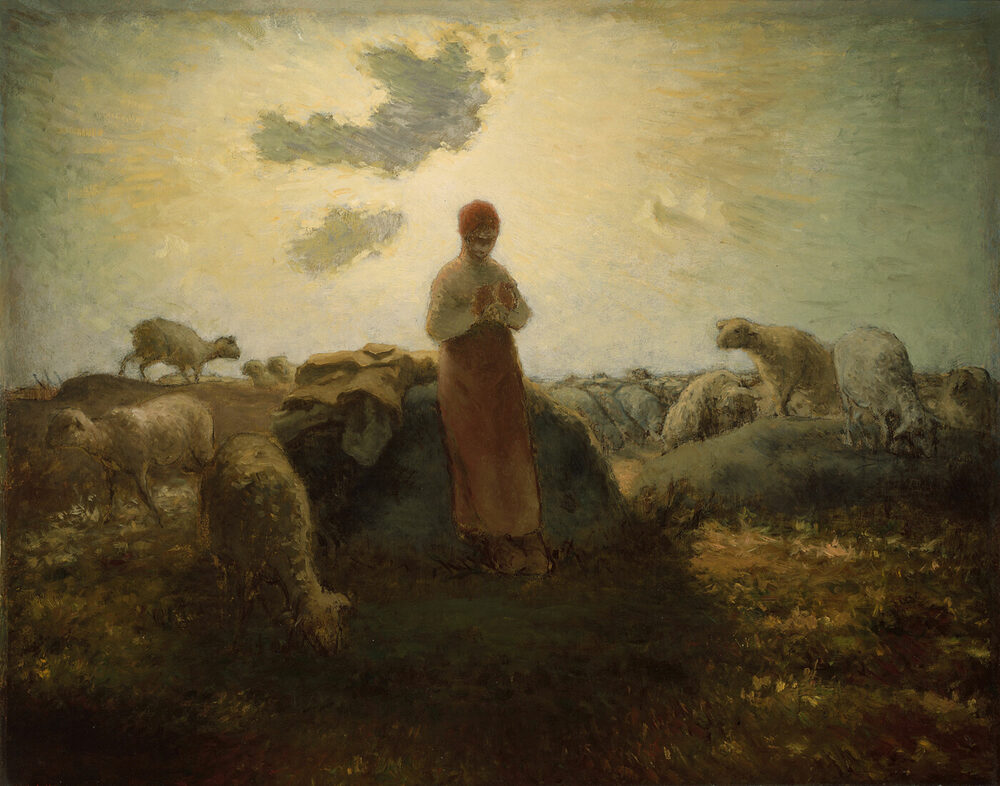
A shepherd stands among her flock on the crest of a hill in early morning light.
The Keeper of the Flock — Jean-François Millet, 1863

Guarding the gate

A watchman does not stand on the wall to be admired; he stands there so that the thing he is guarding is not reached. We are not of the world, and the world’s things should not come in unchallenged. This code sets out how we would counsel a household to filter its router, so that the filth never reaches the rooms where our people sleep.

Read the code →
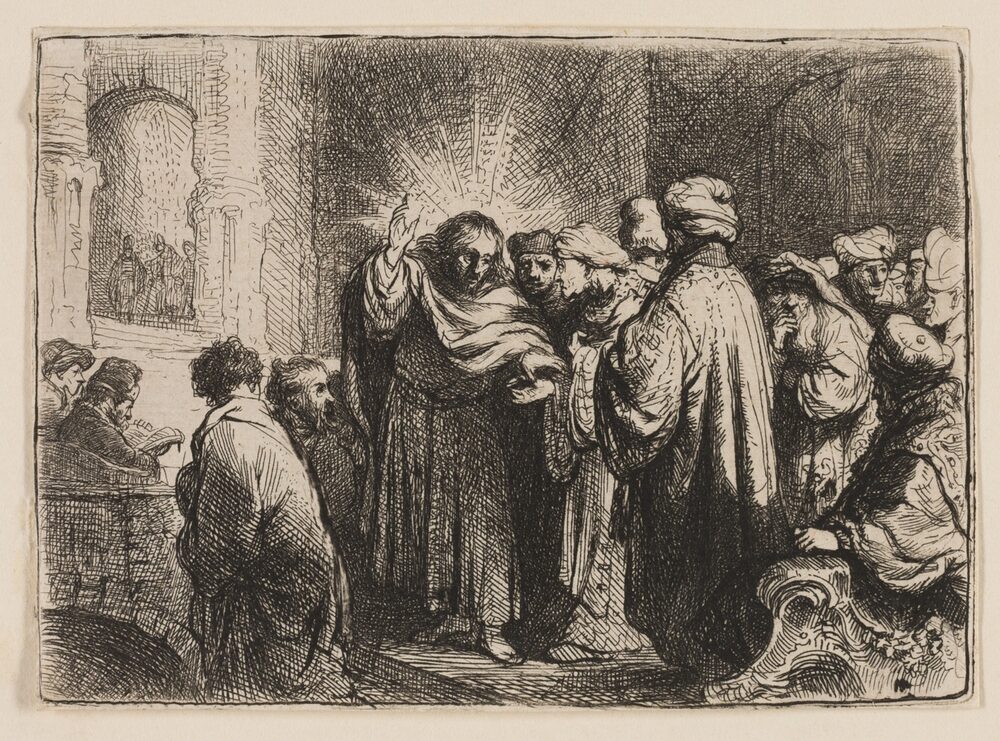
A bearded man counts out coins on a table before men who wait to question him.
The Tribute Money — Rembrandt van Rijn, c. 1634

Sound money, and the end of fiat

Render unto Caesar the things which are Caesar’s — but Caesar did not invent the coin, and he does not own the value in it. This code sets out why we would counsel a household to take no fiat money at all, and to accept only digital cash called Bitcoin Cash.

Read the code →
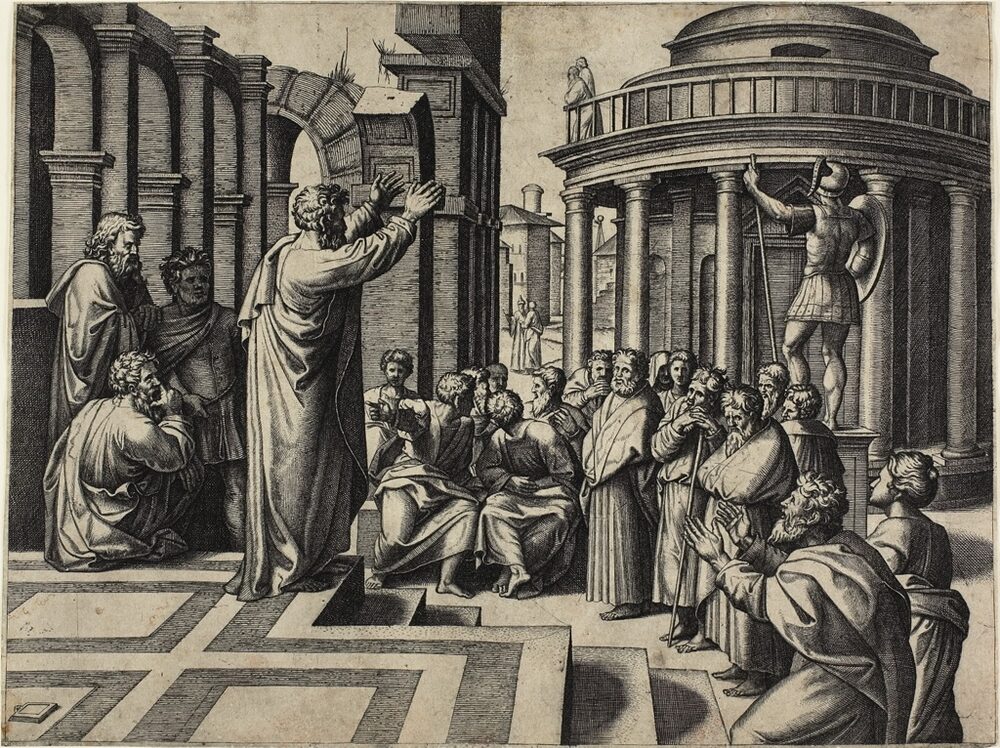
Paul, with both arms raised, preaches to a seated company of philosophers before a domed temple, while a book lies discarded on the pavement.
Paul Preaching at Athens — Marcantonio Raimondi, after Raphael, 1517

From death to life

We have been raised out of the dark, and there is a great deal on offer to a man who is not yet sure it took. This code sets out why a citizen takes no part in the unfruitful works of darkness, keeps himself unspotted from the world, and lets the world’s own paper go unanswered — because a form addressed to a man in the grave comes back undeliverable.

Read the code →

A code is worth what the office that carries it out is worth; we set these down meaning to keep them ourselves, and to be answerable for them. He did not give himself the office, and he cannot give it back. He can only take it up soberly, as one who has been sent for — which brings us to the last thing on this page: answer your calling.

Answer your calling

If a man is qualified for office, and the lot has fallen to him, then what remains for him is not to choose but to answer. He did not give himself the office, and he cannot give it back; he can only take it up, soberly, as one who has been sent for.

Register / pay The benefits of the LORD

He has answered, and he takes up the office soberly. And the King who sent him has not sent him empty — he daily loadeth us with benefits.

Questions on Our Citizens

Can a citizen be cast out?

An office can be lost, and Scripture does not hide this. Judas lost his bishoprick (Acts 1:20); the unprofitable servant was cast into outer darkness (Matthew 25:30). Romans 11:22 puts it exactly: on them which fell, severity. His people are kept by him (John 10:28) — but kept by a Shepherd, not by a filing system.

Is dual citizenship allowed?

No. “No man can serve two masters” (Matthew 6:24), and a double-minded man is unstable in all his ways (James 1:8). A citizen may sojourn in any land and render what is honestly obligated there, but his citizenship is one — with the King.

Must a man be qualified for office?

Yes, and the qualifications precede the calling. “A bishop then must be blameless, the husband of one wife, vigilant, sober, of good behaviour, given to hospitality, apt to teach” (1 Timothy 3:2); and the work is committed to “faithful men, who shall be able to teach others also” (2 Timothy 2:2).