Codes and regulations
Code and Regulation No. 3: From death to life
When Paul came to Athens the city was covered with altars, and every altar had a name written over it. He walked the streets reading the labels, and at last he stopped at one that said only this: TO THE UNKNOWN GOD. It was the honest thing on the whole road. And his answer to it was five words long — him declare I unto you. This code is about the same fault. We have been raised out of the dark, and there is a great deal on offer to a man who is not yet sure it took.
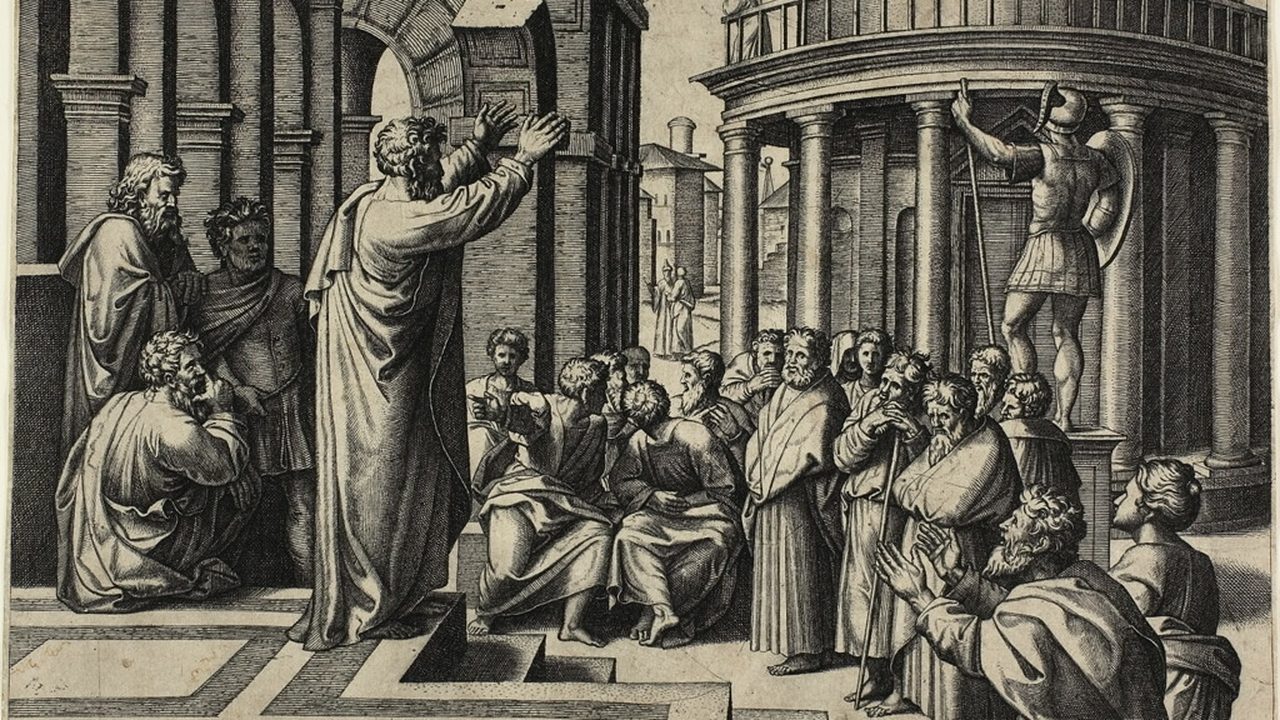
A city that would not stop asking
There is a reason that account is in the book at all. Paul had walked into the most self-satisfied city in the empire, a city that had already decided what it thought of every subject worth thinking about, and he got an audience — because he brought them something they had not got.
Notice how he began. He did not open with a lecture, and he did not open by telling them what they were doing wrong. He read what was already written over their shoulders, and he answered it. Their own poets had said that we are the offspring of God; Paul agreed, and then told them the one thing their poets had left out.
“(For all the Athenians and strangers which were there spent their time in nothing else, but either to tell, or to hear some new thing.)”
Acts 17:21
“For as I passed by, and beheld your devotions, I found an altar with this inscription, TO THE UNKNOWN GOD. Whom therefore ye ignorantly worship, him declare I unto you.”
Acts 17:23
“For in him we live, and move, and have our being; as certain also of your own poets have said, For we are also his offspring.”
Acts 17:28
So we write these codes for the same reason. Not because a page of print persuades anybody of anything. Because a man who has been told a thing plainly is harder to move off it than a man who has only been left to work it out for himself.
The audience is not the problem. The Athenians were willing to hear a stranger all day and travel to a hill to do it. A world will listen too, if what you bring it is actually new to it, and if it is not — that is the whole difficulty. It is a difficulty about what a man has been made, and the Book is plain about it: what we were, and what we have been made.
What we were, and what we have been made
There is a kind of death the world is very good at, and it does not require a grave. It is the death of a man who has finished being described. The world enrolls you; it gives you a form, a number, a seat, a record, and it calls that your life, and it is quite willing to say so at a funeral. What it cannot do is raise you. It has nothing to raise you with, and it never has.
So when Scripture says we were dead and have been quickened, it means what it says — about the account, and about the truth. The death was what a man believed about himself: dead in his trespasses, and the world agreed with him, and kept his papers accordingly. The quickening was the truth underneath the account: he was alive in Christ before he knew it (Acts 17:28), and the raising is to the whole of a man, not to a part of him. The uncircumcision of the flesh is named in the same breath as the trespasses, because a man does not come back by halves. He is either living by the account, or he is resting in what was true of him all along.
“Even when we were dead in sins, hath quickened us together with Christ, (by grace ye are saved;)”
Ephesians 2:5
“And hath raised [us] up together, and made [us] sit together in heavenly [places] in Christ Jesus:”
Ephesians 2:6
“And you, being dead in your sins and the uncircumcision of your flesh, hath he quickened together with him, having forgiven you all trespasses;”
Colossians 2:13
“Likewise reckon ye also yourselves to be dead indeed unto sin, but alive unto God through Jesus Christ our Lord.”
Romans 6:11
That last verse is the one people skip past, and it is the one that makes the rest of this code possible. The reckoning is a thing a man does with his will, and it is done again in the morning — a man wakes inside the old account of himself, and the truth has to be laid over it again: dead unto sin is the account, alive unto God is the fact. Resurrection is not a ticket that was punched once. The world assumes it was, because a ticket is exactly the kind of thing the world understands.
“But if the Spirit of him that raised up Jesus from the dead dwell in you, he that raised up Christ from the dead shall also quicken your mortal bodies by his Spirit that dwelleth in you.”
Romans 8:11
The world will enroll you, give you a form, a number, a seat, and a record, and it will call that your life — and it cannot raise you. It never had anything to raise you with. What it can still draw a man into is the unfruitful works of darkness.
No part in the unfruitful works of darkness
Darkness is the only subject on which the Bible is repeatedly, specifically instructive. And the word it reaches for is not fight. It is fellowship. Have no fellowship with it. And then a second instruction, which is easy to miss: but rather reprove them. Not in the dark, where it can be called private, and not in the dark because that is where it cannot be checked — in the light, where the thing is seen for what it is.
“And have no fellowship with the unfruitful works of darkness, but rather reprove [them].”
Ephesians 5:11
“Wherefore he saith, Awake thou that sleepest, and arise from the dead, and Christ shall give thee light.”
Ephesians 5:14
Notice what this verse is called: unfruitful. Not powerful, not impressive, not worth arguing with. It is described by what it produces, and what it produces is that men are left with many sorrows and no harvest. That is why the counsel is to keep clear of it rather than to stand and contest it. You do not settle an argument with something that cannot lose a point, because there are no points in it. It only takes the daylight out of the room.
“For the love of money is the root of all evil: which while some coveted after, they have erred from the faith, and pierced themselves through with many sorrows.”
1 Timothy 6:10
“No man can serve two masters: for either he will hate the one, and love the other; or else he will hold to the one, and despise the other. Ye cannot serve God and mammon.”
Matthew 6:24
And the verse about waking is not decoration. A man who has been raised and goes on sleeping is not a different kind of believer; he is asleep in the same clothes.
“For ye were sometimes darkness, but now [are] [ye] light in the Lord: walk as children of light:”
Ephesians 5:8
So we counsel every citizen to know, plainly and by name, what he is presently doing in the dark — and then to stop it, quietly, this week, without an argument. This is not a law and it is not a matter of taste; it is what we believe to be right, and we set it down so that any man who thinks otherwise may answer us from the Word. The other half of the same danger is the yoke, and it is one allegiance, and no second.
One allegiance, and no second
Paul’s word for the yoke is not oppressed and not imprisoned. It is entangled again — and that is the whole warning in the word. A cage is obvious. A yoke is a fitting; it is shaped to the animal, it takes a moment to put on, and after a while the animal carries it so naturally that nobody mentions it again. The danger is not that a man should be forced into the world’s service. It is that he should walk into it one small errand at a time, and be yoked before he has ever decided to be. Again is the word for a citizen: the yoke belonged to the man as he accounted himself — dead in his trespasses, and a dead man has no standing to refuse a yoke. He has been quickened out of it (Colossians 2:13), the truth underneath the account, and what is alive does not go back into the yoke of what is dead.
“Stand fast therefore in the liberty wherewith Christ hath made us free, and be not entangled again with the yoke of bondage.”
Galatians 5:1
“What? know ye not that your body is the temple of the Holy Ghost [which] [is] in you, which ye have of God, and ye are not your own?”
1 Corinthians 6:19
“Be ye not unequally yoked together with unbelievers: for what fellowship hath righteousness with unrighteousness? and what communion hath light with darkness?”
2 Corinthians 6:14
“For whether we live, we live unto the Lord; and whether we die, we die unto the Lord: whether we live therefore, or die, we are the Lord’s.”
Romans 14:8
How the yoke is actually fitted
We do not think the world means to enslave anybody. We think it means something more ordinary and more effective than that, which is that it would like to describe you, and then keep the description in use. Here is how that reaches a man who is living a perfectly honest life and has never once been asked to do a dirty thing.
- It renames you A customer, a patient, a member, an employee, a case number. Every one of these is a name that fits, and none of them is the name on the seal. They are the names a world uses for men it counts dead; a citizen has one name, and it is written in heaven (Luke 10:20). Once a man has been answering to one name for long enough, he begins to hear the other one as an affectation.
- It numbers you A reference, an account, a licence, a plate, a file. The number is not the problem; it is that a number is a promise. It says there is a record, and that the record is the true account of the thing — which is the one lie in it. A citizen is not in that account: he was bought with a price (1 Corinthians 6:20), and he is not the world’s to number.
- It makes you differ, and lets you keep the credit Nothing makes a man better than the next one; Scripture says so out loud. But the world will arrange the comparison, and then quietly let him believe the difference was in him. Most of the world’s quiet authority over us is built on that sentence, and it holds because nobody checks it. A man who has stopped believing the old account of himself knows what he did not bring with him: whatever he has, he received it.
- It asks the one question Whose are you? A licence asks it, a contract asks it, a form asks it. It is a good question. The world asks it of a man it counts dead, as though the dead could answer. A citizen is not dead: he is alive in Christ, and was before the question was ever asked. The question has one answer and no second. Whether he lives or dies, he is the Lord’s (Romans 14:8) — and there is only one King that gives standing at all.
And here is what makes the deception worth naming: it does not have to succeed in changing anyone’s mind. It only has to get a man to answer out of habit, out of tidiness, out of not wanting a scene at a counter. It does not need to be believed. It only needs to be filled in.
“For who maketh thee to differ [from] [another]? and what hast thou that thou didst not receive? now if thou didst receive [it], why dost thou glory, as if thou hadst not received [it]?”
1 Corinthians 4:7
“Behold, what manner of love the Father hath bestowed upon us, that we should be called the sons of God: therefore the world knoweth us not, because it knew him not.”
1 John 3:1
“But ye [are] a chosen generation, a royal priesthood, an holy nation, a peculiar people; that ye should shew forth the praises of him who hath called you out of darkness into his marvellous light:”
1 Peter 2:9
“Which in time past [were] not a people, but [are] now the people of God: which had not obtained mercy, but now have obtained mercy.”
1 Peter 2:10
“Nevertheless the foundation of God standeth sure, having this seal, The Lord knoweth them that are his. And, Let every one that nameth the name of Christ depart from iniquity.”
2 Timothy 2:19
That is the whole of our answer to the world’s paperwork. It is not that their records are fraudulent — a great many of them are honestly kept. It is that the Lord knoweth them that are his, and a seal is given on that, and it is not issued by a counter. A citizen’s allegiance was settled before any of it was asked: he was alive in Christ before the world ever asked its question, and the living have one Lord and no second.
A yoke is a fitting, shaped to the animal, and after a while nobody mentions it again. The danger is not that a man should be forced into the world’s service; it is that he should walk into it one small errand at a time. The seal on his citizenship is given by the Lord and not issued by a counter — and what is sealed, he has also called us to keep: spotless, unspotted from the world.
Spotless
We ask our citizens to be spotless, and we are aware of how that sounds — a word that belongs to a man who has finished rather than a man who is trying. It is the word Scripture chose, so we have not improved on it.
The verse that carries it is worth reading closely, because it puts three things in one sentence, and the third is not optional to the first two. You are to visit the fatherless, and the widows in their affliction, and keep yourself unspotted from the world. All three, or none of the three. The world’s claim on a man is answered by what he does for the people who cannot do anything for him in return; and a man who does that and then takes a plate is not cleaner for it. He has simply been busy.
“Pure religion and undefiled before God and the Father is this, To visit the fatherless and widows in their affliction, [and] to keep himself unspotted from the world.”
James 1:27
“Let us draw near with a true heart in full assurance of faith, having our hearts sprinkled from an evil conscience, and our bodies washed with pure water.”
Hebrews 10:22
“Because it is written, Be ye holy; for I am holy.”
1 Peter 1:16
“Come now, and let us reason together, saith the LORD: though your sins be as scarlet, they shall be as white as snow; though they be red like crimson, they shall be as wool.”
Isaiah 1:18
The world would have a man believe he remains under sin — dead spiritually, in his trespasses, with the sentence already pronounced. The Word answers the account: he is alive in Christ, and his sins are wiped away by the atonement (Colossians 2:13). The death was in the belief; the life was in the truth. We hold that a man is made clean, and then told to keep himself clean. The second is not harder than the first, and it is a great deal more ordinary.
A man is made clean by the atonement, and then he is told to keep himself clean; the second is not harder than the first, and it is a great deal more ordinary. So it is set out in concrete things: what this looks like on an ordinary week.
What this looks like on an ordinary week
None of the above is a program for the cloister. It is mostly smaller than that, and it is mostly dull, which is how we know it is the part that matters.
- The world says you are dead For this reason and for that — a criminal here, a trespasser there, a spiritually dead man underneath. That is the only word it has for a man. A citizen answers it: he thought he was dead in his trespasses, as every man does who has not been told otherwise. He was alive in Christ before he knew it, all his trespasses are forgiven him (Colossians 2:13), and there is therefore now no condemnation (Romans 8:1). He is not dead. He is alive in Christ.
- The papers come in capitals The world writes to a man the way a gravestone sets a name, and it addresses him as one who is dead at every line. A citizen keeps his own name in lowercase: he is not dead but alive in Christ, and his name is written in heaven (Luke 10:20). He reads the form before signing it, not after; where he is put under pressure he provides what is asked, truthfully, under the name he is known by; and the paper is never mistaken for his standing, because the ground of a citizen is not in it.
- The dead know not any thing So a citizen does not speak for the dead: he is not one of them, and he is an ambassador for Christ (2 Corinthians 5:20), who sends living men. A letter the world addresses to the man it counts dead is answered by the living man himself, in his own name, or it is not answered at all.
- A citizen worships the living God He is not the God of the dead, but of the living (Matthew 22:32), and a citizen worships no other. He does not worship the dead, and there is nothing dead in what he worships: the King of kings (1 Timothy 6:15) liveth, and was dead, and is alive for evermore (Revelation 1:18).
- Let the dead ones go The unfruitful works are not detected by being reasoned about. They are put right by being stopped, quietly, before the hour in which they are usually done.
- Do something for the powerless James puts it in the same breath, and we have found that he is usually right about which counsels are load-bearing.
- Be sober about your own standing We are a small people with a modest register, and we do not want it read as an achievement. It is a piece of housekeeping.
“For the living know that they shall die: but the dead know not any thing…”
Ecclesiastes 9:5
“The dead praise not the LORD, neither any that go down into silence.”
Psalm 115:17
“I am the God of Abraham, and the God of Isaac, and the God of Jacob? God is not the God of the dead, but of the living.”
Matthew 22:32
“I [am] he that liveth, and was dead; and, behold, I am alive for evermore, Amen; and have the keys of hell and of death.”
Revelation 1:18
And so we end where we began, on a street in Athens. The men on that hill thought they were dead in their trespasses — the one thing their long learning had settled about them — but they were really alive in Christ, and their own poet had said so: in him we live, and move, and have our being (Acts 17:28). Their conscience had been compelling them toward what was right the whole time, with the work of the law written in their hearts (Romans 2:14–15); what kept them at the altars was not conscience but tradition, and the tradition of death asked for one more offering, and then one more. A man stood in front of a city that had put a name over every god it could find, he pointed at the one name that was honest, and he told them the God behind it. He preached unto them Jesus, and the resurrection (Acts 17:18): that they might stop that tradition of death and rest in the fact that they are alive in Christ the King. That is the gospel. Nobody had to take his word for it, and no clerk issued it, and nothing about it was filed anywhere. He told them whose altar it was, and left them to go and do something about it.
And a good many of them did. They are the only account in the book of people who heard this sort of thing and then went home to check whether it was true — not once, but every day, in the Scriptures, to see whether these things were so.
“These were more noble than those in Thessalonica, in that they received the word with all readiness of mind, and searched the scriptures daily, whether those things were so.”
Acts 17:11
Which is the only standing any of us has ever had. Not the paper, and not the register, and not the name on a form somebody filled in — but a man who went and looked, and carried on looking, and would not be told a thing about himself he had not read for himself. Every code we have issued is set down in one place, and that place is what we would counsel our citizens.